How to Build Breakfast Right

Chris Isidore
| 16-04-2026
 · Food Team
Most people treat breakfast as an afterthought — a piece of toast grabbed on the way out, a bowl of cereal poured in thirty seconds, or worse, nothing at all. Then they wonder why their energy crashes by mid-morning and they are ravenous before lunch.
The problem is almost never the ingredients. It is the combination. A well-built breakfast follows a simple structural logic that keeps blood sugar stable, sustains energy for hours, and actually satisfies hunger rather than just postponing it.
The Three Components Every Breakfast Needs
A breakfast that works is built from three elements working together. Remove any one of them and the whole structure becomes less effective.
1. Protein plays a key role in keeping meals satisfying and supporting steady energy levels. According to nutrition research summarized by the Harvard T.H. Chan School of Public Health, protein slows digestion and helps promote satiety, which can reduce overall hunger. Nutrition scientist Stuart M. Phillips explains that protein intake helps regulate appetite by influencing hormones related to hunger and fullness, supporting more sustained energy compared to meals high in refined carbohydrates alone.
2. Complex carbohydrates — the fuel source. Not all carbohydrates behave the same way. Simple carbohydrates — white bread, sugary cereals, pastries — spike blood sugar rapidly and cause an equally rapid crash. Complex carbohydrates — oats, wholegrain bread, sweet potato, fruit — release energy gradually and provide fibre that supports digestion. The goal is sustained release, not an immediate surge.
3. Nourishing fats — the satiety signal. Dietary fats trigger the release of hormones that tell your brain the meal is complete. Without them, meals feel unsatisfying regardless of their caloric content. Avocado, eggs, nuts, seeds, and full-fat dairy all contribute this element.
A breakfast built from all three components keeps most people comfortably satisfied for four to five hours. One built from carbohydrates alone rarely lasts two.
Practical Combinations That Actually Work
Theory is straightforward — application is where most people lose track. Here are combinations that deliver all three components without requiring more than ten minutes of preparation.
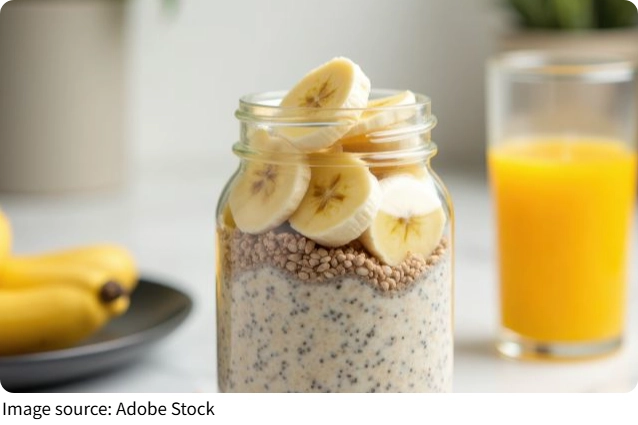
1. Oats with nut butter and banana — rolled oats provide complex carbohydrates and fibre; a tablespoon of almond or cashew butter adds protein and rich oils; banana contributes natural sugars and potassium. Top with a handful of pumpkin seeds for additional protein and crunch.
2. Eggs on wholegrain toast with avocado — two eggs supply complete protein and natural oils; wholegrain bread provides slow-release carbohydrates; half an avocado adds monounsaturated oils and fibre. Add sliced tomato or a handful of spinach to increase micronutrient density.
3. Greek yoghurt with berries and granola — full-fat Greek yoghurt delivers protein and richness in a single ingredient; mixed berries provide antioxidants and natural sweetness; a small portion of low-sugar granola adds crunch and carbohydrate. Keep the granola portion modest — most commercial granolas are more sugar than oat.
4. Smoked salmon on rye with cream cheese — rye bread is one of the most blood-sugar-stable grain choices available; smoked salmon provides protein and omega-3 oils; cream cheese contributes richness and depth. Add thinly sliced cucumber and a squeeze of lemon to finish.
What to Reduce — and Why
Certain breakfast habits feel satisfying in the short term but undermine energy and focus within the hour.
1. Fruit juice — a glass of orange juice contains the sugar of four to five oranges with almost none of the fibre. The fibre in whole fruit is what moderates sugar absorption; without it, juice behaves more like a sugary drink than a nutritious one. Eat the fruit whole instead.
2. Sweetened cereals and flavoured instant oats — the sugar content in many popular breakfast cereals exceeds that of a dessert. Check the label: anything with more than 8g of sugar per 100g warrants a closer look.
3. White bread alone — a slice of white toast with jam provides almost no protein or nourishing oils, digests rapidly, and leaves most people hungry within ninety minutes. If toast is your preference, choose wholegrain and always pair it with a protein source.
Timing Matters Too
The window between waking and eating affects how well the meal performs. Eating within 60 to 90 minutes of waking aligns with the body's natural cortisol rhythm — cortisol peaks in the morning to mobilise energy, and eating during this window works with that process rather than against it.
If appetite is low in the morning, starting with something small — a handful of nuts and a piece of fruit — is more effective than skipping the meal entirely. Appetite often increases once the digestive system is activated.

Breakfast does not need to be complicated or time-consuming to be effective. It needs to be intentional. The ten minutes you invest in building a meal with protein, complex carbohydrates, and nourishing fats returns hours of stable energy that a grabbed handful of crackers simply cannot provide. What you eat first sets the tone for everything that follows — and that is a lever worth using deliberately.