Long Ride Gear Guide

Mukesh Kumar
| 07-09-2026
 · Vehicle Team
Lykkers, a long motorcycle journey begins with preparation. Extended rides can expose us to changing temperatures, wind, rain, dust, and hours of continuous riding, so choosing the right equipment is essential.
The goal is not to pack everything we own, but to carry dependable gear that supports protection, comfort, control, and changing conditions.
Start With the Right Helmet
A properly fitted helmet is the foundation of motorcycle protection. For long-distance riding, a full-face design can protect the head and face while helping shield us from wind, dust, insects, and road debris.
The fit should be secure without creating painful pressure points. Before purchasing, wear the helmet for several minutes and check that the retention system can be adjusted easily. It is also important to choose a helmet that complies with a recognized safety standard applicable to the riding area.
Choose Protective Riding Clothing
A purpose-built motorcycle jacket and trousers can provide protection from weather and road abrasion. For variable conditions, look for equipment that combines durability with suitable ventilation and water resistance.
Protective padding at the shoulders, elbows, hips, and knees can provide additional impact protection. These protective elements should remain correctly positioned while riding, and the clothing should allow natural movement without being excessively loose. If cooler temperatures are expected, leave enough room for an additional layer.
Wear Proper Riding Gloves
Gloves protect the hands while maintaining the sensitivity needed to operate the controls. They should fit securely and allow the fingers to move naturally.
Weather-resistant materials can be useful in wet or cool conditions, while reinforced sections can add protection. Before departure, operate the motorcycle's controls while wearing the gloves to confirm that movement and grip remain comfortable.
Select Supportive Footwear
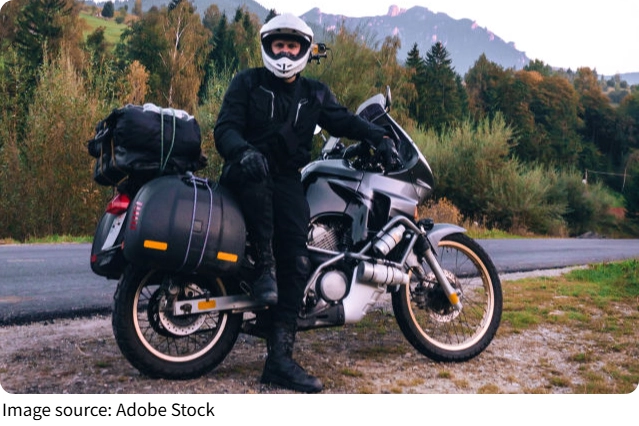
Motorcycle-specific boots or riding shoes can provide better support and protection than ordinary casual footwear. Look for secure fastening, durable construction, ankle coverage, and a firm sole.
Water-resistant construction can be particularly useful when rain is expected. A stable sole also helps provide secure footing when stopping or maneuvering the motorcycle at low speed.
Keep Your Vision Clear
Clear vision is essential throughout a long ride. Wind, dust, insects, rain, and road spray can affect visibility and make the journey less comfortable.
Inspect the visor or protective eyewear before departure and keep it clean during the trip. A soft cleaning cloth takes up little space and can be useful when the viewing surface becomes dirty.
Carry Essential Road Equipment
A carefully organized travel kit can provide useful support without adding unnecessary weight. Navigation equipment can assist with unfamiliar routes, while secure luggage keeps clothing and personal items organized.
A basic first-aid kit, appropriate tire-repair equipment, essential tools, charging equipment, and a compact light are practical additions. Store frequently needed items where they can be reached easily.
Prepare for Weather Changes
Weather conditions can shift during a long journey, particularly when a route crosses different elevations or climates. Lightweight layers provide flexibility because they can be added or removed as temperatures change.
A compact rain layer is worth carrying even when conditions look favorable at departure. An additional pair of gloves or a lightweight warm layer can also be useful when temperatures fall. Keep weather equipment accessible rather than buried at the bottom of the luggage.
Test Your Setup Before Departure
The best time to discover an equipment problem is before the journey begins. Take a short practice ride using the helmet, clothing, gloves, footwear, luggage, and navigation equipment you plan to use.
Pay attention to anything that shifts, restricts movement, creates discomfort, or is difficult to access. Adjusting the setup beforehand can make the actual journey considerably easier.
Final Thoughts
Long-distance motorcycle preparation is about choosing the right equipment rather than carrying more of it. A properly fitted helmet, protective clothing, suitable gloves, supportive footwear, clear eye protection, essential road equipment, and adaptable layers provide a practical foundation for extended riding.
Lykkers, before setting out, take a final look at the route, weather, motorcycle, and equipment. A thoughtful preparation routine helps keep the ride comfortable, organized, and focused from the first kilometer to the last.